

EV Tax Credits
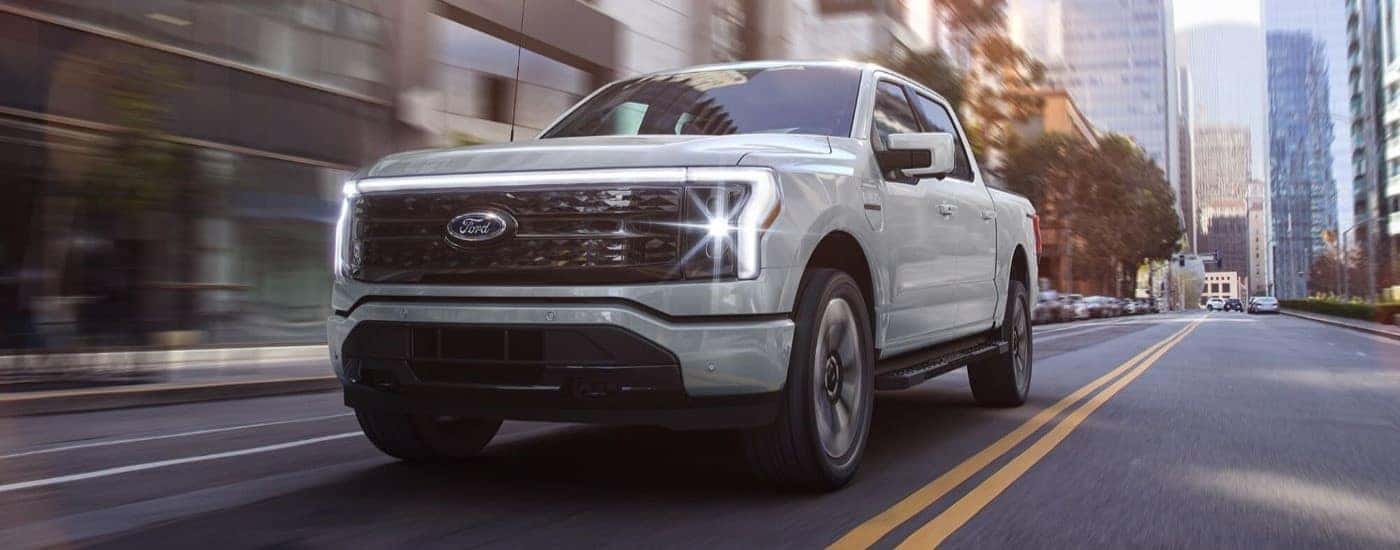
There are many reasons to look at electric vehicles when shopping for your next car. You may want to leave the gas pump behind, help the environment by eliminating emissions, or experience the instant torque and advanced engineering going into EV development. In addition to these factors, one of the biggest reasons a lot of people look at EVs is the fact that you can receive a federal income tax credit by purchasing one. These EV tax credits first went into effect quite some time ago, but the Inflation Reduction Act of 2022 made numerous changes and updates to how this tax credit works.
Before we get into the details of the federal EV tax credit, we should mention that this is a complicated subject, and it is dependent on a number of laws and regulations. These things change based on decisions made by the federal government, so always make sure you are aware of the latest information. We should also mention that this is not tax advice—you should always talk to a tax professional before purchasing an EV to make sure you are following the tax code and getting the most from your potential credit.
What Is the Federal EV Tax Credit?
The EV tax credit is simply a credit provided by the federal government to reduce your income tax obligation for the year when you purchase an electric vehicle. There is a lot to unpack when it comes to the specifics of this credit. First of all, we want to reiterate that it applies to the taxes you file for the year you buy the vehicle. In other words, if you buy a qualifying EV in 2024, you need to fill out the necessary form for the tax credit when you file your 2024 federal income taxes in early 2025. You cannot choose to use the credit for a different year.
Starting in 2023, you can qualify for up to a $7,500 tax credit when you purchase an EV. The amount you qualify for is based on whether the vehicle was sold as new or used, as well as the battery capacity of the vehicle and where it was built. There are also restrictions based on the price of the vehicle and your income. We will get into some specifics of these factors further down.
Here’s how the tax credit works. The government will not write you a check for that amount. Instead, the credit will reduce your tax obligation for the year you bought the EV. For example, let us say that you qualify for a $5,000 tax credit and when you file your federal income taxes, it shows that you owe $6,000 in taxes for the year. The credit would reduce that down to $1,000 in tax liability instead. However, if you had that same $5,000 credit and owed $4,000 in taxes for the year, it would only reduce your tax obligation to $0. The remaining $1,000 worth of credit would be lost.
Which Vehicles Qualify for the Tax Credit?
One of the most complicated aspects of understanding the EV tax credit is which vehicles qualify for it. The first thing you should know is that only models that plug in to charge or have a fuel cell can qualify. So all-electric vehicles qualify, as do hydrogen fuel-cell vehicles and some plug-in hybrids. Traditional hybrids that do not plug in for a charge do not qualify for the tax credit.
In addition, the IRA added new requirements for the vehicle to be assembled in North America. Similarly, a certain percentage of the vehicle’s battery must be assembled or manufactured in North America, and a certain percentage of the “critical minerals” used in the EV’s battery has to come from the US or a country the US has a free-trade agreement with. Starting in 2024, the EV also cannot use battery parts from certain countries, which is a way to eliminate batteries from China and other locales.
Those are very specific requirements, and they can be difficult to keep track of. Fortunately, the US Department of Energy has established lists of qualifying vehicles from previous years, and they offer a Vehicle Identification Number (VIN) lookup tool that lets you type any VIN from a vehicle made after 2022 and see if it qualifies. The team here at Faricy Automotive will also work with you to determine the tax credit eligibility of any model that you are interested in.

Tax Credits for Used EV Models
In the past, EV tax credits were only available for brand-new vehicles, which meant only the first buyer of an EV could take advantage of them. One of the most exciting changes made by the Inflation Reduction Act is that buyers of pre-owned EVs are now eligible for the tax credit. However, some important stipulations exist, and the credit is lower than for a new vehicle. In order for a used EV to be able to qualify, it must:
- Have a price of $25,000 or less
- Be at least two years old or older
- Be purchased from a qualified dealership
In addition, a buyer can only claim a tax credit for a used EV model once every three years. You cannot buy a used EV two years in a row and get the credit each time. The amount of the used EV tax credit is 30% of the purchase price of the vehicle, up to a maximum of $4,000. Still, the fact that you can get a tax credit for a pre-owned EV is fantastic and makes these modern vehicles more accessible to a wider range of car buyers.
A New Income Eligibility Requirement
The final requirement to keep in mind for an EV tax credit is your income—there are restrictions on who can qualify based on how much you earn. For a new model, limits based on filing status are:
- Single/Married, Filing Separately: $150,000
- Head of Household: $225,000
- Married, Filing Jointly: $300,000
For a used EV, limits based on filing status are:
- Single/Married, Filing Separately: $75,000
- Head of Household: $112,500
- Married, Filing Jointly: $150,000
If your modified adjusted gross income for the year you are trying to get the tax credit for exceeds this limit, then you cannot receive the credit. However, you can use your adjusted gross income from the previous year if it qualifies.
The Colorado EV Tax Credit
In addition to the federal EV tax credit, Colorado drivers can take advantage of our own state tax credit. While the total value of this credit is lower, and it only applies to new vehicles, it is much less restrictive. This means it is possible to qualify for the Colorado EV tax credit even if you do not qualify for the federal tax credit, so keep that in mind when you are shopping.
Starting in 2023, the Colorado EV tax credit is $2,000 for any light-duty passenger vehicle with a battery capacity of over four kWh. This covers virtually every modern electric vehicle and plug-in hybrid. However, if you are buying an electric truck with a Gross Vehicle Weight Rating (GVWR) of over 8,500 lbs––which includes certain configurations of the Ford F-150 Lightning––then this credit increases to $2,800. Colorado also provides a $1,500 tax credit for leasing an electric vehicle or plug-in hybrid, which increases to $1,750 for heavy electric trucks.
Like the federal EV tax credit, the Colorado credit is generally applied when you file your state income taxes and reduces your state tax liability. However, if you are financing or leasing your vehicle, you have the option of transferring the tax credit to the bank or other lender you are financing with. If the lender agrees, this will result in the immediate application of the tax credit to the price of the vehicle. While not all lenders accept this option, we will try our best to find you one that does if you wish to take advantage of it.

Get the Most When Shopping for an EV
At first glance, the EV tax credits can seem complex, but that is typically true of anything involving taxes. Thankfully, they are not quite as complicated as they might seem; it just takes a little time to look at all of the details involved and make sure any vehicle you are interested in qualifies for the credit. It is important that you keep track of vital information for any EV you are interested in and check the VIN and other details on a model you want to buy to ensure it qualifies for the tax credit. Finally, be sure to check for additional incentives, rebates, and offers from your city and county since parts of Colorado have more options you can take advantage of in addition to the federal and state tax credits. That’s a lot to remember, but the team here at Faricy Automotive is ready to help as you look for ways to save when buying an electric vehicle.