

Electric Car Maintenance
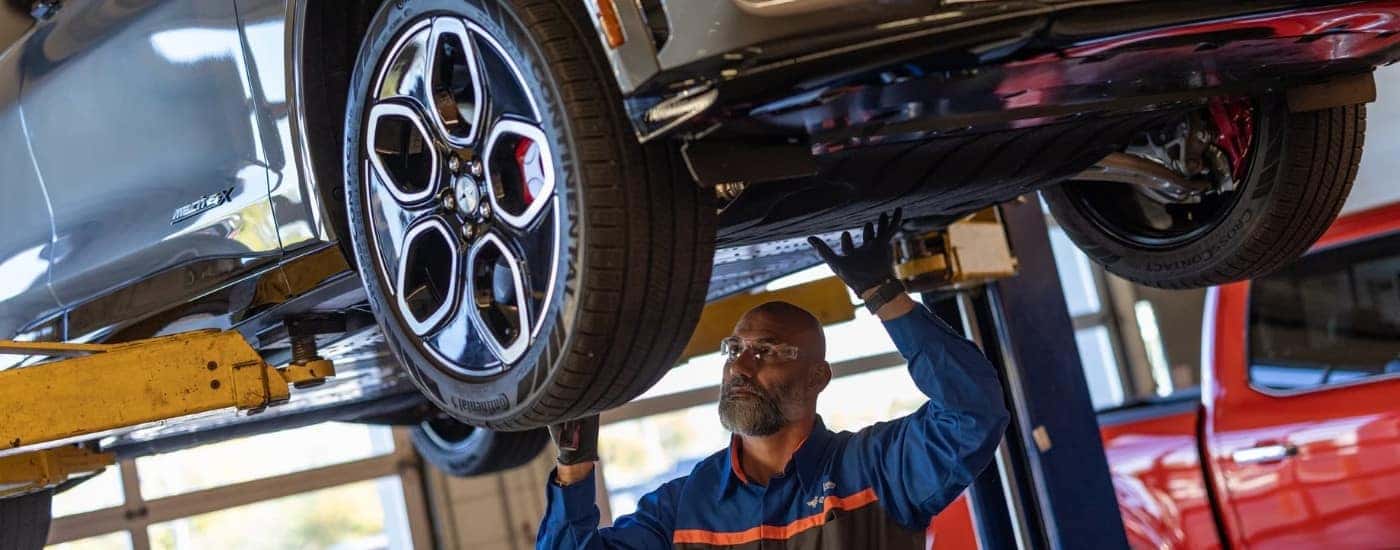
Maintenance might not be fun, but it’s essential to your vehicle’s long-term health and performance. Not that long ago, keeping a car on the road meant a long list of basic maintenance tasks, including regular tune-ups, spark plug replacement, brake adjustment, and more, making car maintenance a full-time job for some drivers. Internal combustion engine (ICE) vehicles have certainly come a long way with regard to required maintenance, but they’re still not exactly self-sufficient. Regular oil changes and fluid, belt, and filter replacements are as important as ever, but now there’s a new alternative.
Electric vehicle sales have seen steady growth over the last few years, becoming a force to be reckoned with in today’s market. This growth has been driven by the promise of increased efficiency and lower emissions, as well as by some generous federal tax credits, but the relatively low cost of EV maintenance is another important factor in the segment’s rise. EVs can’t be totally neglected when it comes to regularly scheduled maintenance, but they sure require a whole lot less of it.
According to a study by the Argonne National Laboratory, EVs cost 40% less to repair and maintain over the course of their service life, making them an increasingly attractive prospect for drivers looking to save a little money at the repair shop. But what does the average driver need to know about electric car maintenance? Read on as we dive into the similarities and differences between EV and ICE maintenance, explore maintenance tasks related to an EV’s battery, electric motor, and tires, and see if the DIY approach is the right choice when something goes wrong.
How Is EV Maintenance Different?
Generally speaking, maintaining an EV is much easier than a gas-powered vehicle, but that’s not to say that electric models require zero maintenance whatsoever. So, how does EV maintenance differ from the work you’d perform on an ICE vehicle?
First off, an EV obviously lacks an internal combustion engine, which is often one of the most expensive and difficult components to maintain in any vehicle. Keeping an ICE vehicle running doesn’t just mean keeping the engine itself in good working order but also the various cooling, ignition, and exhaust systems that work in tandem with the engine. When it comes to maintaining an EV, you can skip a lot of these common tasks, including oil changes. While an oil change might not seem like one of the biggest or most annoying expenditures, it can really add up over time. That cash would stay right in your pocket if you were driving an EV.
But the lack of oil changes isn’t the only financial selling point for EV ownership. Due to the fact that they’re simply much less complicated and designed with parts that experience significantly less wear-and-tear than traditional ICE vehicles, EVs can present a real bargain over time. While estimates vary, the numbers are pretty encouraging. According to one study by Consumer Reports, the average lifetime cost of maintaining an EV is $4,600 less than maintaining an ICE vehicle. It’s easy to see why so many drivers are turning to the EV segment.
Ways EV Maintenance Is the Same
EVs might be much easier and cheaper to keep on the road than their ICE counterparts, but the two types of vehicles do have a few things in common when it comes to scheduled maintenance. An EV’s powertrain is much less complicated than what you’d find under the hood of a gas-powered vehicle, but outside of the electric motor, battery, and various EV-specific components, an EV isn’t that much different from a “normal” car, truck, or SUV.
Take the tires, for example. An EV might use specialty tires designed with low rolling resistance, but they’re still just tires and, as such, still need to be rotated regularly. Tire alignment is another task that can’t be disregarded just because you’re in an EV. In fact, getting an alignment every year can make a big difference in an electric car’s overall efficiency and range, not to mention its effect on safety and performance.
EVs also need regular brake service and replacement, though the recommended maintenance schedule is a bit more lenient than with a gas-powered vehicle, thanks to their regenerative braking systems. An EV’s electric motor and battery might not get as hot as a 200-plus degree gas engine, but they still need a cooling system to keep everything within an optimal temperature range. This means regularly checking in on the EV’s cooling system, though actual coolant replacement should be rather rare unless something goes wrong.
Like gas-powered vehicles, EVs generally come with a transmission, though it’s usually a bit simpler than the traditional multi-gear setup. Most EVs use a single-speed gearbox that, due to its straightforward design, doesn’t require the same level of maintenance as the multi-speed transmissions found in ICE vehicles. You’ll still need to keep an eye on the transmission fluid, but it should last a lot longer between changes.
Then there are those little things that need maintenance on anything with four wheels: the suspension, steering linkages, tie-rod ends, ball joints, etc. The same goes for interior maintenance, such as changing out the cabin air filter, which should be done on a regular basis. An EV’s battery also needs replacement every four to five years––but don’t worry, we’re talking about the 12V battery under the hood, not the expensive lithium-ion battery that actually powers the vehicle.
What Maintenance Does an EV Battery Require?
Electric cars might not need a lot of maintenance––at least when compared to ICE vehicles––but if there’s one component you want to take extra special care of, it’s the battery. As one of the most expensive parts to replace in any EV, battery maintenance should never be treated as an afterthought. A well-maintained battery should last the life of the vehicle, but failing to adhere to good charging habits can have a substantial impact on its service life. So what’s an EV driver to do if they want to keep their battery humming along for the next few decades? It all starts with charging.
The batteries that power today’s EV might be a marvel of modern engineering, but they can be a little finicky. Charging a battery above 80 percent or letting it fall below 20 percent can have a detrimental effect on overall battery health. Luckily, many EVs come with a feature that allows drivers to set a maximum charge level, making it easy to avoid the sort of overcharging that can harm a battery. An empty battery can be just as damaging as a full one, so if storing your EV for an extended period, consider investing in a charger to keep the battery within the prime 20 to 80-percent charge band.
Minimizing exposure to high temperatures is another solid tip for maximizing the life of your EV battery. Modern electric cars are built with a thermal management system to keep the battery at the optimal temperature, but this can drain the batteries and impact overall efficiency. Lastly, avoid Level 3 DC fast charging when you don’t need to. While this speedy charging option is convenient, with the ability to charge a battery to 80 percent in as little as 20 minutes, that sudden surge of power is not good for the battery in the long term.
Do EV Batteries Have to Be Replaced?
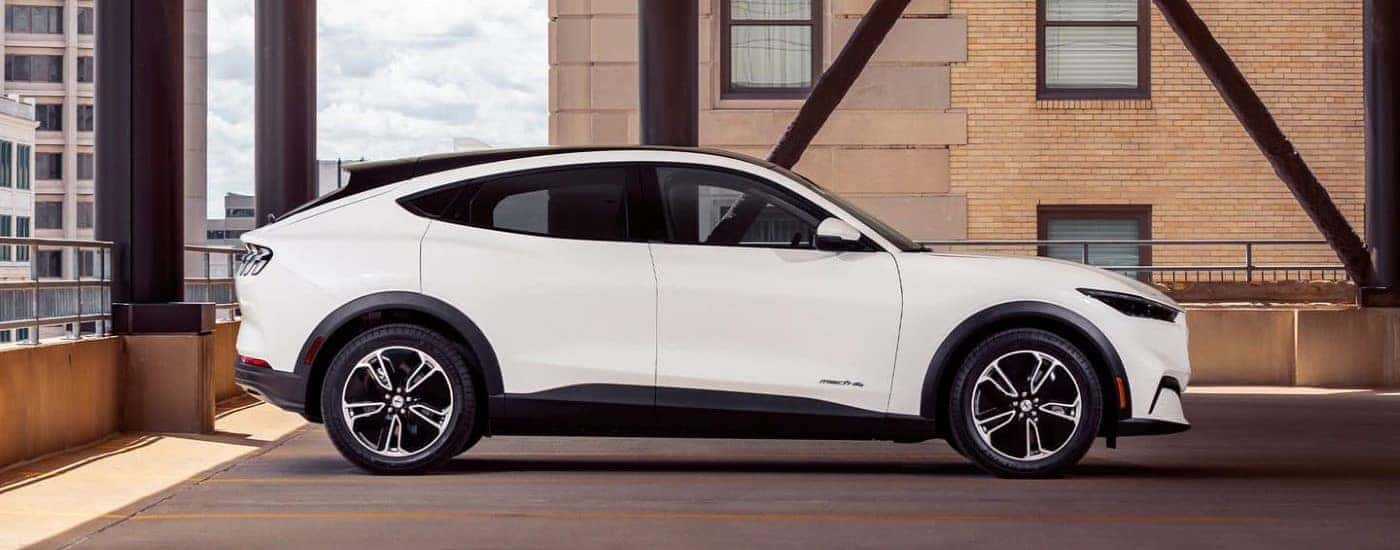
No matter how well it’s maintained, every EV battery has a certain expiration date. Batteries will gradually lose some capacity over time, but it’s a much slower process than many drivers realize. In general, an EV battery will lose about one to two percent of its maximum range per year, although the loss is not always linear. While this loss can be mitigated by adhering to a good charging routine, range loss is an inevitable part of the current EV landscape.
That said, you can expect to get well over a decade out of an EV battery without replacing it, and automakers offer generous warranties for their battery packs. Take Nissan and Ford, for example. These established automakers cover battery repair and replacement for the first eight years or 100,000 miles. Rivian takes the crown for the longest warranty by mileage with its eight-year or 175,000-mile policy, while Hyundai has the longest warranty by time with 10 years or 100,000 miles of coverage. Tesla’s warranty lasts eight years and 100,000 to 150,000 miles, depending on the model.
In a perfect world, an EV battery should last the life of the vehicle, but these comprehensive warranty plans provide the sort of coverage against the unexpected that you get when purchasing a new gas-powered vehicle. If your EV does require a new battery, the odds are the warranty will cover it. Otherwise, the cost to replace it will depend on the battery’s size, design, and manufacturer. Generally speaking, drivers should expect to pay more to replace a large battery like the 212 kWh pack in the GMC Hummer EV than a small battery like the 65 kWh pack in the Chevy Bolt EV. Refurbished and reconditioned EV batteries are also an option for those looking to save money, though they can be difficult to source for less common makes and models.
What Maintenance Do EV Motors Require?
Keeping a gas engine running isn’t always easy. There’s a lot to keep track of, from oil and filter changes to spark plugs, ignition coils, timing belts, fuel injectors, and more. The internal combustion process might be effective, but it can be messy, necessitating the repair and replacement of countless components to keep your car rolling.
An EV’s electric motor is a breeze, by comparison, boasting a virtually non-existent list of maintenance tasks. Electric motors aren’t saddled with the pistons, connecting rods, spark plugs, crankshafts, valves, and intake manifolds you’ll find on a gas engine, not to mention the cooling, ignition, and exhaust-related components like the oxygen sensor, timing belt, and various filters that support the function of the engine itself.
The difference between a gas engine and an electric motor largely comes down to complexity. A gasoline engine contains hundreds of individual moving parts, while an electric motor gets by with just a fraction of that. This simplicity pays dividends when it comes to maintenance, drastically reducing the time and effort that would otherwise be spent tracking down problems, replacing parts, and sticking to a recommended maintenance schedule. An electric motor should also last the life of your vehicle, making it one of the last things you need to worry about when you’re behind the wheel of an EV.
Electric Car Brake Maintenance
From lessening your environmental impact to saving money at the pump, EV ownership has many benefits. Brake replacement is another key advantage, as an EV’s brake pads tend to last significantly longer than those found on ICE vehicles. A gas-powered car typically needs a new set of pads every few years, but in an EV, the recommended replacement period can be substantially longer.
Why do an EV’s brake pads last so long? It all comes down to regenerative braking. In a traditional ICE vehicle, your brake pads are 100 percent responsible for bringing the car to a stop every time you press down on the brake pedal. This creates a lot of friction, which leads to the sort of wear-and-tear that requires frequent replacement. With regenerative braking, the brake pads are only part of the equation. Regenerative braking uses an EV’s electric motor to take on the brunt of braking duties.
When the brake pedal is depressed, regenerative braking flips the electric motor into reverse. Instead of converting electricity into motion, the motor now does the opposite, creating resistance and converting motion back into electricity while bringing the vehicle to a stop. If regenerative braking isn’t strong enough to do the job alone, the traditional brake pads spring into action. However, with enough planning and the development of good driving habits, it’s easy to significantly reduce the load on your brake pads.

Choosing the Right Tires for Your EV
If you want to maximize the range of your vehicle, a good set of EV-specific tires can go a long way. While the tires found on traditional gas-powered vehicles will certainly fit most EVs, they’re not necessarily designed to handle the weight and instant torque of an electric car. This can result in accelerated wear, poor traction, heat-related problems, and even a loss of directional stability, none of which you want to experience while cruising down the highway at 70 mph. EV-specific tires have different rubber compounds and tread designs than typical tires, making them the perfect fit for today’s electric cars.
Then there’s the issue of noise. In a typical ICE vehicle, the sound of the engine drowns out the noise generated by the tires as they roll over the pavement. This creates an issue for the EV segment where this road noise can become noticeable and even distracting, thanks to the nearly silent electric motor. A tire’s tread pattern has the biggest effect on how loud it is, which is why EV tires are specifically designed with a tread pattern that strikes a careful balance between traction and noise reduction.
Lastly, there’s the effect of the tires on the vehicle’s range. Range is often one of the biggest factors that a driver considers when shopping for an EV, and the right set of tires can make a big difference. In order to maximize efficiency, EV tires are designed to have lower rolling resistance. The lower the rolling resistance, the less work the motor has to put into pushing the car down the road, and the more range you’ll enjoy.
Can You DIY Electric Car Maintenance?
Many EV maintenance tasks are well within the scope of a competent DIY mechanic, but there are some riskier projects that should probably be left to the pros. Topping off wiper fluid, checking the cooling system, or changing the brake pads, brake fluid, or tires isn’t that tricky, but things can get a little hairy when you start messing with some of an EV’s high-voltage components.
From the traction battery pack and electric motor to the onboard charger, high-voltage wiring harness, and charging port, EVs have lots of unique parts you won’t find on an ICE vehicle. Most EVs use a 400V or 800V electrical architecture, which is more than enough to seriously harm you if proper safety procedures aren’t followed. As with ICE vehicles, you probably shouldn’t dive into a DIY repair or maintenance project if you don’t know what a part does, how it works, or the risks involved.
Electric cars might be a relatively new addition to the road, but there are already plenty of EV specialists out there who can help get your electric car, truck, or SUV back on the road without risking life and limb. You might have built a strong relationship with that mechanic you’ve been going to since you bought your first car, but when dealing with any electrical or high-voltage components, it might be time to branch out and seek a specialist.

Maintaining an EV May Be Different, But It Isn’t Difficult
Electric car maintenance might seem a little intimidating to the uninitiated, but the more you learn about this new breed of alternative fuel vehicles, the more approachable they become. Sure, there’s a lot of new lingo to learn and abbreviations to decipher––kWh, MPGe, BEV, J-Plug, NACS––but once you familiarize yourself with a few key concepts, EVs are actually much simpler than the gas-powered models on the road today. From longer-lasting brakes and ultra-efficient electric motors to simple single-speed transmissions and more, EVs represent an improvement in almost every way when it comes to vehicle maintenance. The numbers speak for themselves: EVs are already cheaper to own than ICE vehicles, and that cost of ownership will only continue to fall as more mechanics and dealerships carve out a niche in EV sales, maintenance, and repair.
At Faricy Automotive, we aim to be one of the first such dealerships in the Colorado Springs area. We’re all-in on the all-electric future of transportation and are eager to help educate the public on this exciting new era. We’re always keeping up with the latest advancements in EV tech, design, and repair and are uniquely positioned to help our customers take advantage of today’s rapidly expanding EV segment. Internal combustion has served the driving public well over the last 100-plus years, but compared to the new breed of EVs, they’re messy, complicated, and inefficient, not to mention a drag on the environment. Burning fossil fuels to power a vehicle was a clever solution at one point, but those days are long past, and the EV era is just starting.